Alchemy Factory Transmuter & Catalyst Guide
Master the transmuter and advanced athanor catalysts in Alchemy Factory 1.0: which catalysts to add, recipe branching, and output optimization.
Quick Answer: Where the Transmuter Fits in the 1.0 Production Tree
Alchemy Factory Version 1.0 decoupled the Tech Tree from the physical Workbench, and the transmuter sits at the core of the Tech Tree as the central branching station for alchemical refinement:
- Recipe Branching: Inserting distinct catalysts into an Advanced Athanor alters the chemical reaction, allowing a single machine to produce different high-tier outputs depending on the loaded catalyst.
- Catalyst-Tier Consumables: Version 1.0 rebalanced Star Dust, Black Powder, and Unstable Catalyst to provide clean multi-branch pathways for luxury goods.
- Dual Sustained Inputs: Operating a catalyst chamber requires consistent delivery of both the base reagent and the catalyst reagent; starving either feed causes the machine to idle or produce empty cycles.
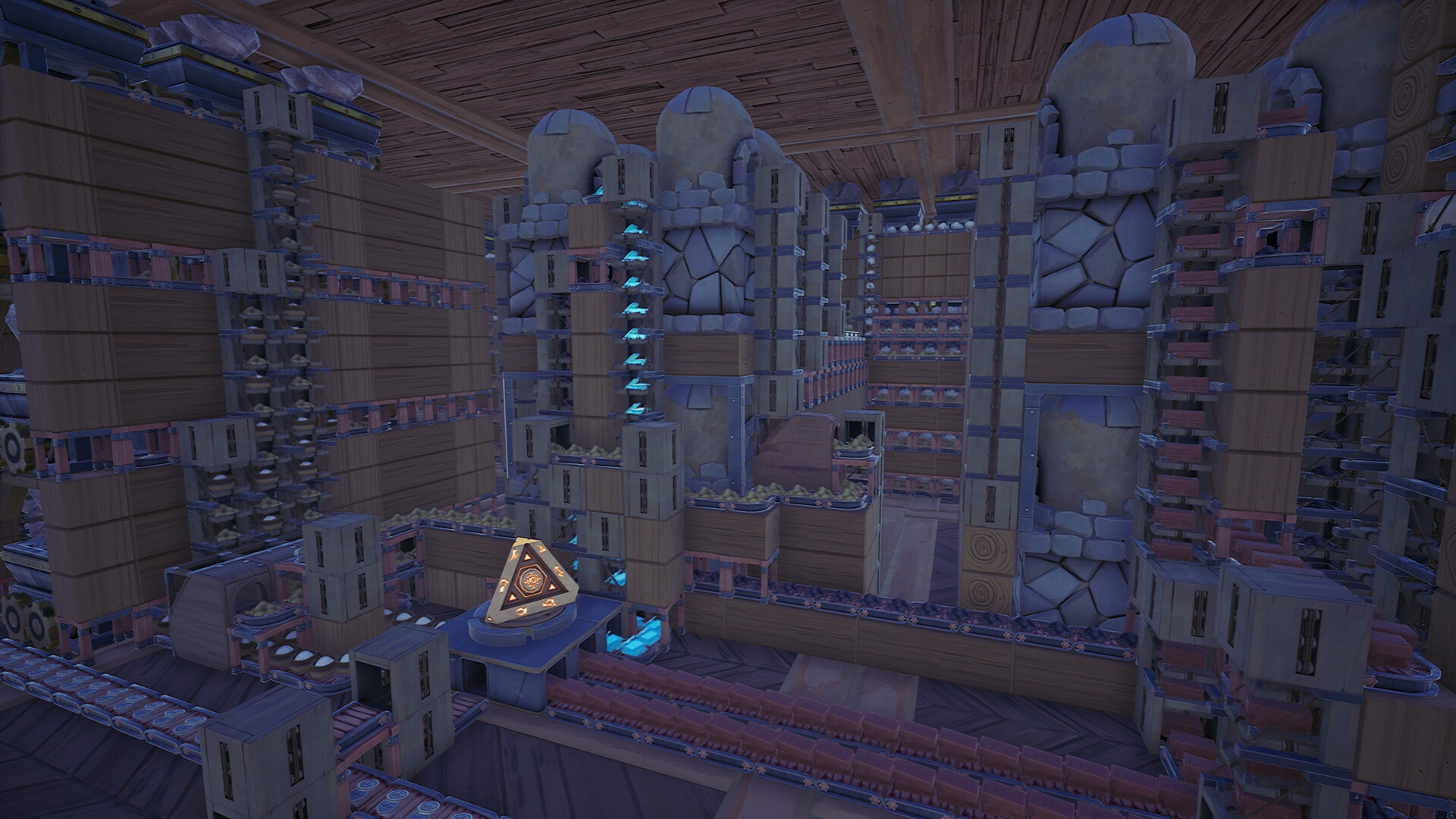
Advanced Athanor Mechanics & Catalyst Slot Functionality
In traditional alchemical setups, every product requires a dedicated machine chain. As recipes become more intricate, building duplicate athanors across multiple rooms rapidly consumes factory real estate. The Transmuter System solves this scaling challenge through catalytic modification:
- The Catalyst Slot: Advanced Athanors feature a secondary input manifold designed specifically for catalytic agents.
- Dynamic Product Switching: By changing the catalyst fed into the slot, players can alter the output product without tearing down or rebuilding conveyor belts.
- Consumable Ratios: Catalysts are consumed at a fixed stoichiometric ratio alongside base reagents during each reaction cycle.
Catalyst Slot Decision Tree & Production Targets
Which catalyst to load depends on your commercial goals and the throughput capacity of your feeder lines:
| Manufacturing Goal | Recommended Catalyst | Target Product Class | Feeder Coupling Requirement |
|---|---|---|---|
| Tier-2 Gem Jewelry | Star Dust | High-value, low-volume retail luxury | Dual sustained solid hoppers |
| Tier-1 Ancient Relics | Black Powder | High-margin royal dispatch commissions | Dedicated solvent pipe + powder feed |
| Catalyst Loop Refresh | Unstable Catalyst | Reagent replenishment for next cycle | Single sustained chemical feed |
| Vitality Potion Branch | Sage | Agricultural growth and healing tonics | Direct conveyor feed from nursery |
Engineering Rule: If your logistics infrastructure cannot reliably sustain two parallel inputs to the same athanor, do not engage the catalyst slot. Running a single saturated base recipe is always more productive than running a starved catalyst chamber that stalls mid-cycle.
Transmuter Catalysts vs Transmutation Cauldrons
Beginner alchemists frequently confuse Transmuters with Cauldrons. Understanding their structural differences is vital for designing clean factory layouts:
| Operational Characteristic | Advanced Athanor (Transmuter) | Transmutation Cauldron |
|---|---|---|
| Primary Machine Role | Upstream catalytic branching | Downstream terminal transmutation |
| Input Manifold | 1 Reagent + 1 Catalyst slot | 3 Distinct, non-repeating items |
| Reaction Logic | Deterministic recipe modification | Secret alchemical value exchange |
| Catalyst Consumption | Requires specialized catalytic dusts | Does not take catalysts |
| Downstream Destination | Feeds cauldrons, chillers, or assemblers | Terminal mineral casting or vault storage |
The Cauldron is a terminal synthesizer that collapses extensive multi-step production trees into valuable minerals and gold dust. It does not accept catalyst items. Catalysts belong strictly in the upstream athanor stages that refine the intermediate ingredients fed into cauldrons.
Catalyst Recipe Evolution Across Official Patches
The transmuter’s catalyst mechanics received significant balance adjustments during development by developer D5 Copperhead:
| Patch Milestone | Implemented Catalyst Balance | Engineering Impact |
|---|---|---|
| 1.0 Recipe Rebalance | Reworked Unstable Catalyst, Black Powder, and Star Dust formulas | Eliminated dead Early Access branches that generated unusable byproducts |
| Paradox Timing Pass | Synchronized reaction time for timber logs, copper ingots, and sage | Prevented reagent desync where catalysts arrived out of sequence, producing empty cycles |
| Cauldron Calc Pass | Corrected calculation bugs when the first and third input recipes matched | Stabilized multi-loop closed feedback circuits feeding transmuter outputs into cauldrons |
Modular Transmuter Blueprint Design & Hopper Filtering
To build an adaptable transmuter module that switches outputs on demand:
- Filtered Splitters: Install filtered splitters on the catalyst input line. By toggling the active filter from Star Dust to Black Powder, you can redirect different catalyst crates from your warehouse without touching machine wiring.
- Overflow Purge Bins: Place a small overflow bin on the catalyst input belt. When swapping catalyst types, any residual items from the previous production run clear out cleanly, preventing mixed-input jams.
- Dedicated Feeder Lines: Never daisy-chain a catalyst feed across three machines in series. Use a balanced splitter manifold so each athanor receives an equal share of the catalyst stream.
Step-by-Step Transmuter Commissioning Checklist
Before connecting high-tier reagents into an advanced athanor, verify each stage against this commissioning protocol:
| Stage | Inspection Target | Acceptance Criteria | Failure Remediation |
|---|---|---|---|
| Stage 1: Reagent Saturation | Primary intake hopper | Constant supply of 30+ items per minute | Upgrade upstream extractor belts to Logistics Tier 2 |
| Stage 2: Catalyst Purity | Secondary catalyst valve | Zero mixed items or residual dusts from prior runs | Install an automated trash sorter on the feed belt |
| Stage 3: Thermal Balance | Heat chamber coils | Steady operating temperature | Connect dedicated charcoal or oil fuel feeds |
| Stage 4: Output Evacuation | Outbound conveyor tap | Clear belt with no backpressure or idling | Route direct overflow line into commission staging |
Following this four-stage checklist guarantees that your catalytic transmutation lines operate at maximum efficiency without wasting rare mineral dusts or stalling downstream cauldron arrays.
Common Catalyst Mistakes to Avoid
- Daisy-Chaining Catalyst Pipes Across Athanors: Advanced athanors consume catalysts rapidly. Feeding multiple machines from an unbuffered pipe starves downstream units, producing empty outputs.
- Feeding Stale Early Access Catalyst Recipes: Legacy blueprints often batch-produce outdated versions of Star Dust or Black Powder that do not register in 1.0 athanor slots. Always verify recipes in the current 1.0 Codex.
- Attempting to Catalyst a Cauldron: Cauldrons are terminal three-item transmutation basins. They do not have catalyst slots; catalysts must be applied upstream in athanors.
- Neglecting Intermediate Buffer Crates: If catalyst production pauses for even ten seconds, upstream reagent belts will back up into nursery extractors. Always maintain a buffer chest between the catalyst synthesizer and the transmuter.
Related Guides
- Check furnace heating tables in the Cauldron Brewing Catalog.
- Plan your catalyst unlock priority in the Research Progression Roadmap.
- Monetize high-tier transmutations through Royal Order Fulfillment.
Blueprint FAQs
What does the transmuter do in Alchemy Factory? +
The transmuter is the station where you feed reagents plus catalysts into an advanced athanor to modify the output. Adding different catalysts changes which recipe result you get out of the same athanor, so one machine can branch into several products.
Which catalysts should I add? +
The 1.0-era recipe rebalance reworked the Unstable Catalyst, Black Powder and Star Dust recipes, which are the catalyst-tier consumables. If you run multi-branch athanors, batch-produce Star Dust for the catalyst slot and use Black Powder for the byproduct lane.
Why do I get empty outputs? +
The most common cause is the cauldron-calculation case where the 1st and 3rd recipes match. That was fixed in the cauldron calc pass; if you are still seeing it, your athanor input pipe is likely shared with another athanor, which starves the catalyst slot.
Do catalysts affect the cauldron? +
No. The cauldron is the terminal craft station and does not take a catalyst input; the catalyst modifies the athanor stage that feeds the cauldron, not the cauldron itself.